
Carbon Positive Trial Update – February 2025
Added 10 months ago
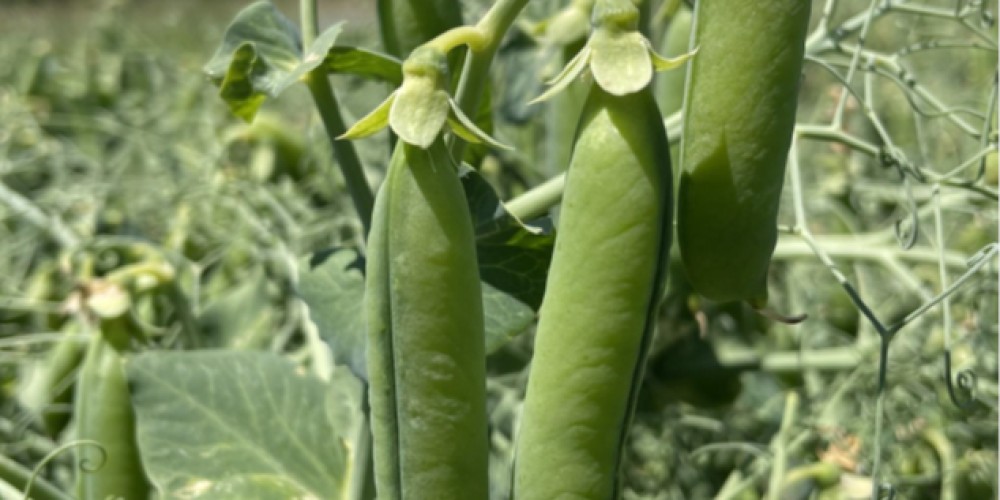
Milestone 9 reports on the 2024 spring pea crop, the establishment of the summer bean crop, and the latest soil health and environmental monitoring.

Spring soil monitoring showed the Regenerative treatment had the best soil structure, with significantly lower bulk density and the highest Visual Soil Assessment scores. While labile carbon and nitrogen levels were similar across treatments, regenerative plots showed better porosity and moisture retention. Early earthworm eDNA testing showed promising correlations with measured earthworm counts.
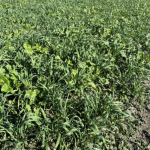
However, the mismatched maturity of cover crop species meant the regenerative plots spent several weeks with low ground cover—highlighting the need for improved cover crop mixes and termination strategies.

The 2024 pea crop was harvested earlier than expected due to warm, dry conditions.
Key findings:
- Conventional peas yielded the highest, achieving 5.74 t/ha (hand harvest) compared to 4.69 t/ha for Hybrid.
- Machine-harvested yields showed the same pattern: 7 t/ha vs 4.5 t/ha.
- Hybrid peas had better tenderness ratings (less mature) and earned a higher price per tonne.
- Conventional plots produced the most plant biomass and removed more carbon in harvested peas.
- Gross margins were positive for Conventional (+$272/ha) and negative for Hybrid (–$98/ha).
- Regenerative plots did not grow peas this season, instead prioritising soil recovery.

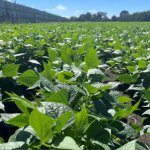
Beans were planted in late December, with good emergence across all treatments. Regenerative plots showed higher soil moisture during establishment, and nitrogen levels in both Hybrid and Regenerative treatments were boosted by residue breakdown after pea harvest or cover crop mulch.
Biologicals were incorporated into Hybrid and Regenerative systems to reduce microbial stress, and all treatments received targeted weed control.
Environmental Impact (EIQ)
To date, most environmental impact comes from herbicides used pre- and post-planting. The Regenerative treatment has the lowest EIQ due to reduced residual herbicide use.
Sharing Learning Across the Region
The project continues to host regular field walks and present findings at grower events and industry seminars. Engagement has been strong, with growers, processors, advisors, and MPI staff attending events focused on cover cropping, soil health, and system performance.
What’s Next?
Milestone 10 will report on the bean crop harvest and provide a full comparison across the three management systems. Early indications show valuable learnings emerging around cover crop design, soil moisture dynamics, and the economic–environmental balance of each system.
Carbon Positive Update
Carbon Positive Trial Update - October 2024
Carbon Positive May Update
Carbon Positive Project Update April 2024
Carbon Positive March Update