
Are We Changing Soil Carbon Yet? Three Years In, the Jury’s Still Out
Added 11 months ago
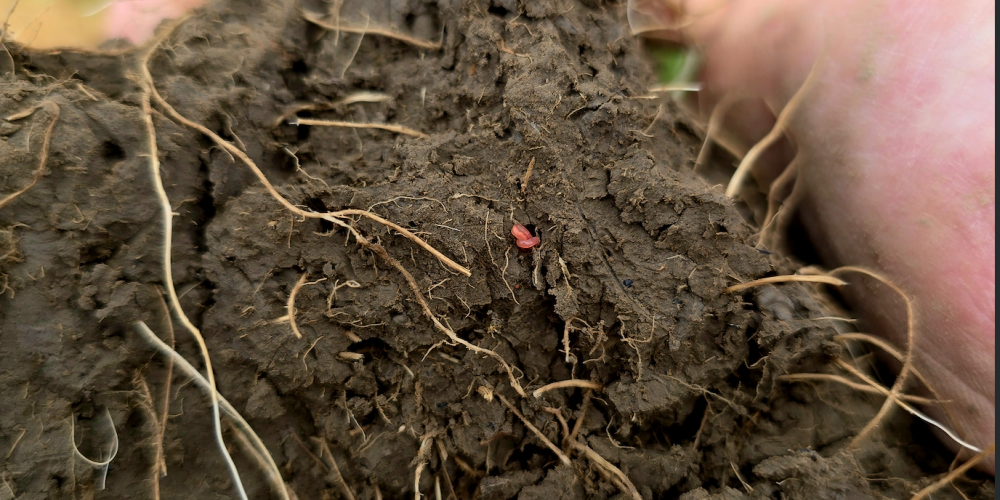
Three years into the Carbon Positive Project, one of the big questions remains deceptively simple: are we actually changing soil carbon?
The short answer is “it’s complicated”.
Between 2022 and 2025, all three treatments, Conventional, Hybrid, and Regenerative, showed increases in total soil carbon, but none of these changes were statistically significant (all p-values > 0.05). In other words, the observed gains could still be within the range of natural variability.
This variability is clearly visible in the stacked bar charts of individual plots. Even within the same treatment, neighbouring plots can behave quite differently, typical of real-world field trials rather than controlled laboratory conditions. That “noise” makes it harder to detect genuine shifts over just three years.
What we can say is that the pattern of change is consistent:
-
Total carbon increased modestly in all systems.
-
Labile (hot water extractable) carbon decreased slightly.
-
Carbon appears to be redistributing from the topsoil into deeper layers.
Roughly 32–35% of total carbon still sits in the top 15 cm, about 26–27% in each of the middle layers, and 12–17% in the deepest layer (600–900 mm). That deeper pool is slowly growing in all treatments.
The team is cautious not to over-interpret the early data. Over the next stages of the project, they hope to link soil carbon patterns with other management factors such as cultivation intensity, nitrogen application, agrichemical use, and periods of bare soil.
The takeaway for now? Meaningful soil carbon change is slow, messy, and highly variable, and that’s exactly why long-term trials like Carbon Positive are so valuable.
Be the first to leave a comment.
Leave a comment
All comments are reviewed before they are published on the website. Your email address will not be published.
Carbon Positive Trial Update – February 2025
Carbon Positive Update

Community Engagement and Knowledge Sharing Strengthen the Carbon Positive Project
Farewell to Trustee Phil Schofield – A Foundational Leader of the HBFFCT
Kraft Heinz - Why Regenerative Agriculture is a Business Essential
Join the conversation